


Whether you're mixing colour at home or behind the chair, one ratio is often overlooked: developer to dye. Mix it incorrectly and you're stuck with uneven roots, colour that fades after two washes, or a colour that doesn't even resemble the swatch. Mix it correctly and you'll see immediate results. Learn how much 20 volume developer to mix with colour, when the standard 1:1.5 ratio applies, when a 1:2 mix is the right call, and the small technical tips that will make your colour look like it came from the salon.
What Is a Hair Developer?
A hair developer is what actually opens up the hair cuticle so that pigment can penetrate into the hair strand. It is the oxidising agent in hair colour and without it, dye simply sits on top of the hair. Developers are usually just hydrogen peroxide suspended in a cream or liquid base, but they come in different strengths (or volumes): 10, 20, 30, or 40.
The volume refers to how much lightening power it contains. Volume 20 developers are right in the middle of the scale. It's strong enough to lighten hair by up to two levels and will process grey hair, but isn't so strong that it will over-process the hair shaft like a 30 or 40 volume developer can.
Volume and percentage describe the same thing. Volume measures how much oxygen a peroxide releases; percentage measures how much hydrogen peroxide is in the bottle. 10 volume is 3%, 20 volume is 6%, 30 volume is 9%, and 40 volume is 12%. European labels usually print the percentage, so a bottle marked 6% and a 20 vol developer are the same product strength.
How Much 20 Volume Developer Should You Mix With Hair Colour?
Mix GK Hair colour with 20 volume developer at 1:1.5, which means one part colour to one and a half parts developer. That ratio is the standard across the Juvexin Cream Color line for levels 1 to 10, and it carries enough pigment for 100% grey coverage while staying fluid enough to apply evenly. Reserve 1:2 for superlighteners, where dilution is the point.
Volume, not ratio, sets the lift ceiling. 20 volume lifts around two levels whether you mix it at 1:1.5 or 1:2; the extra developer only thins the pigment. If two levels is not enough lift for the result you want, move up to 30 volume rather than adding more 20.
One trap people tend to fall into is treating this as a one-size-fits-all ratio. It's not. Permanent colour lines have different formula strengths: some are built for a 1:1 mix, others for 1:1.5 or 1:2, so check the manufacturer's recommended ratio first. Remember to measure your ratios by volume (don't "eyeball" it with a squeeze) so the mix is consistent from bowl to bowl. That consistency is what actually dictates whether the colour will process evenly.
10, 20, 30 & 40 Volume Developer: Quick Comparison
| Developer Volume | Lift Achieved | Best Used For | Typical Processing Time |
| 10 Volume | None to minimal | Depositing colour, darkening, toning | 20-30 min |
| 20 Volume | Up to 2 levels | Grey coverage, standard colour changes | 30-45 min (use the full 45 for resistant grey) |
| 30 Volume | Up to 3 levels | Noticeable lightening, resistant hair | 30-45 min |
| 40 Volume | Up to 4 levels | Maximum lift, pre-lightening only | 30-50 min, checked every 10 minutes |
Processing time is set by the colour or lightener, not by the developer. Always follow the timing on the tube you are using and start checking at the halfway mark.
Stylist Corner: When a client's hair is fine, coloured or chemically treated in any way, we use 20 volume even if the colour we want to apply technically needs 30. You don't need that extra lift if it's going to cause more dryness on already damaged hair. You can always go back and double process, but you can't fix overprocessed hair.
How to Choose the Right Developer
Choose your developer to match your hair goal: use 10 volume to deposit or darken hair, 20 volume to cover greys and slightly lift colour, and 30 or 40 volume only to achieve dramatic lightening on virgin or resistant hair. The condition of the hair is just as important as the end goal; whether damaged or fine, hair will often take a lower volume better, even if it takes a little longer to process. And if you would rather avoid peroxide altogether, plant-based colour options work in a completely different way and are worth reading up on before you commit.
Approach your developer choice less like an equation and more like a question you would ask yourself: what does this hair need? 20 volume is best for typical applications because it hits the sweet spot of the two most common goals: grey coverage and slight lift.
Related: Hair Color Levels and Different Volumes of Developers
Is 20 Volume Developer Enough for Dark or Black Hair?
For depositing colour on dark hair, yes. For visibly lightening it, no. 20 volume lifts around two levels, so a level 2 black base will only reach a dark brown before the underlying warmth appears. Reds, browns and grey coverage all work well at 20 volume. To go lighter than a level 4, pre-lighten first rather than reaching for a higher volume.
Which 20 Volume Developer Should You Use?
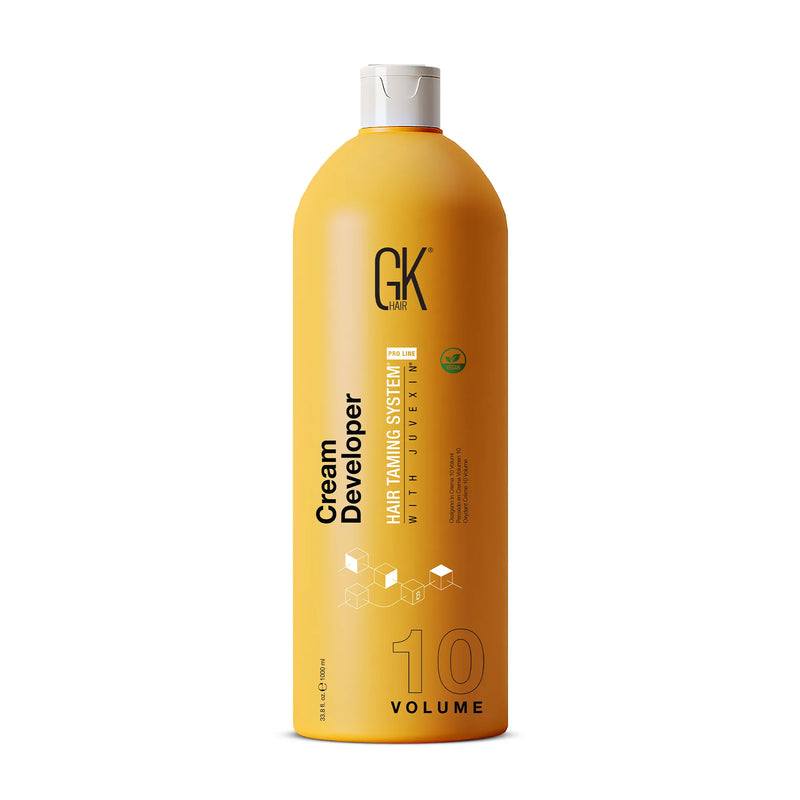
GK Hair Cream Developer 20 Volume is a naturally derived cream peroxide built for the Juvexin Color line, delivering up to 2 levels of lift and 100% grey coverage. It is best for stylists and confident home colourists covering grey or making a standard shade change on healthy to normal hair. The cream base holds its viscosity on the section, so it brushes on evenly instead of running at the hairline.

It comes in a 5 fl. oz. (150 ml) bottle for single services and a 33.8 fl. oz. (1000 ml) salon bottle, and sits alongside 8, 10, 30 and 40 Volume in the same range, so you can match the volume to the service rather than the bottle you happen to own.
Can You Use 20 Volume Developer on Grey Hair?
Yes, 20 volume developer is generally accepted as the standard for grey coverage. It has enough lift to open the cuticle sufficiently for pigment to adhere to stubborn, often coarser, grey hair while not being so strong that it can't be used for regular maintenance. Most permanent colour lines are built around this application.
Grey hair is more resistant to colour because there is less natural pigment and the cuticle layer is tighter. This is why 10 volume can struggle to colour grey hair; there isn't enough lift to open up the cuticle for the colour to deposit.
Stay at 1:1.5 for grey. Grey hair contains no pigment of its own, so coverage depends on how much pigment you deposit, not how much developer you add. Doubling the developer thins the mix and leaves grey strands looking translucent or patchy. If greys are resistant, extend the processing time or apply to the grey-heavy sections first; do not water down the formula.
Why Does Hair Colour Need a Developer?
Hair colour needs a developer because dye molecules cannot enter the hair on their own. The peroxide in the developer opens the cuticle and triggers the oxidation reaction inside the cortex, where small dye precursors join into molecules too large to rinse out. Without it, pigment sits on the surface and lifts off in a wash or two.
This is also why box dye "refreshers" and colour mixed without developer can only tint; they won't lighten or cover grey completely. An under-mixed or over-diluted formula fades within a few washes, while a correctly mixed permanent colour holds its depth until regrowth brings you back for a root touch-up at around 4 to 6 weeks.
How to Measure Hair Colour and Developer
Most formulas require a 1:1, 1:1.5 or 1:2 ratio of colour to developer, measured by volume rather than eyeballed. Mix in a non-metallic bowl using a proper measuring device (a scoop, syringe, or marked applicator bottle) so the ratio is consistent from root to tip.
Accurate measuring is more important than you might think, as even a slightly imbalanced ratio will alter how your mixture acts on your hair.
Stylist Corner: Always mix a little extra. You never want to run out while you are applying and have to remix a second batch. It will create a line of demarcation when the colour dries.
How to Use a 20 Volume Developer
Technique matters as much as the ratio. Here's the sequence professional colourists follow:
- At least 48 hours before the full application, perform a strand test and a patch test.
- On colour day, section your hair into four parts.
- Mix your 20 volume developer with your colour or bleach at the manufacturer's recommended ratio (1:1.5 for GK Hair colour, levels 1 to 10) and stir thoroughly until you achieve a creamy texture. Use GK Hair Cream Developer 20 Volume, a naturally derived cream peroxide that gives up to 2 levels of lift and 100% grey coverage, and holds its consistency on the section so the formula stays where you paint it.
- Apply the formula to the most resistant places first (typically the root area or grey-heavy sections) because they will take the longest to process.
- After about half of the recommended processing time has passed, begin checking the colour every 10 minutes. Hair doesn't process at a linear rate, and checking ensures you won't overprocess.
- Rinse until the water runs clear, then follow with our Moisturizing Shampoo. It contains Juvexin V2, a plant-based non-hydrolysed keratin protein derived from quinoa and pea. Smaller molecules penetrate the cortex to rebuild strength from the inside out, while larger ones coat the cuticle to seal in colour and smooth the surface.
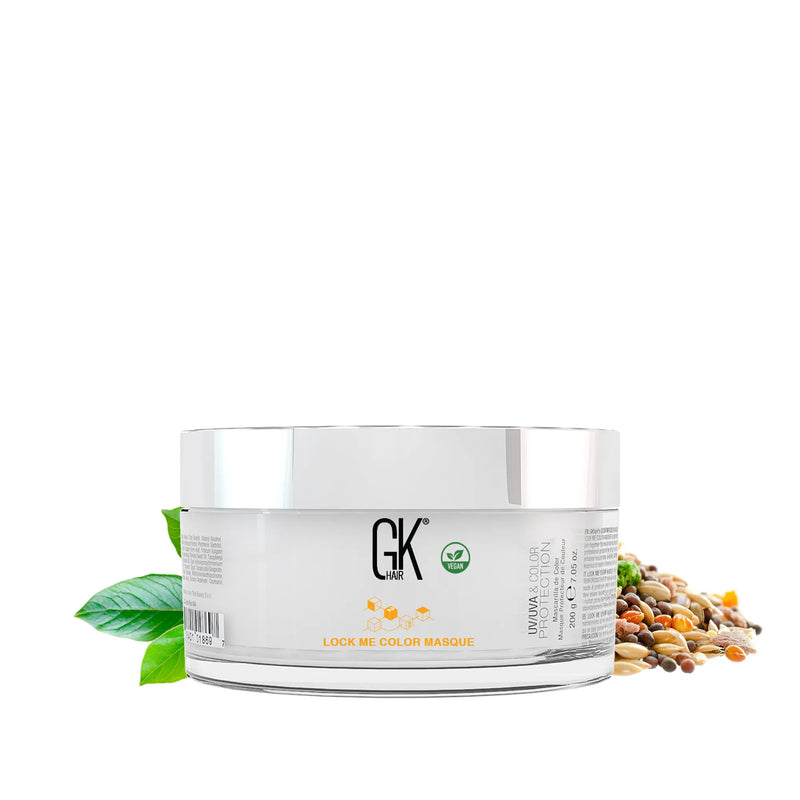
- Also, follow up with our Lock Me Color Masque for best results; check the product page to read the ingredient list. Our products are trusted by professional salons in over 75 countries and the results speak for themselves.
Common Mistakes When Mixing Hair Dye and Developer
Using the wrong ratio for your desired outcome (reaching for 1:2 when the formula calls for 1:1.5, or vice versa) can create patchy, disappointing colour. Second to that is mixing colour in a metal bowl. Metal ions accelerate the breakdown of hydrogen peroxide, so the formula can start oxidising before it reaches the hair and lift unevenly once it does. Mix in plastic, glass, or silicone.
Yet other patterns are noticeably common:
- Eyeballing your measurements instead of using a scoop or bottle with measurements marked on it (skewing your ratio).
- Not doing a strand test (meaning you won't know how the colour turns out until it's been processed all over your head).
- Applying colour to dirty hair instead of freshly washed hair (or not following the given instructions of that particular product).
- Not mixing the dye well or rushing the mixing steps, leaving lumps that create patchy application.
Across our salon education sessions, the fault we correct most often is not shade selection; it is a developer ratio guessed by eye rather than measured. Two colourists using the same tube and the same 20 volume developer can produce visibly different results if one of them is guessing at the second half of the mix.
Frequently Asked Questions (FAQs)
What happens if you put too much developer in hair dye?
Excess developer thins out the colour. This causes a lighter final colour and can create a streaky application. Over-diluting your developer will also make the mixture more difficult to manage during processing, as an overly diluted formula can process unevenly and leave you with patches of hair that are under- or over-lightened in comparison to an accurately measured batch.
How much 20-volume developer do I mix with bleach?
Mix bleach with 20 volume developer at 1:2 (one part bleach to two parts developer). The looser consistency spreads more evenly than bleach alone while still giving you the full 20 volume lift.
How long should you leave a 20-volume developer on?
Most permanent colour mixed with 20 volume processes for 30 to 45 minutes, with the longer end used for resistant grey. Start checking the section every 10 minutes once you pass the halfway point.
What does a 20 volume developer do?
20 volume developer opens the hair cuticle and oxidises the dye inside the cortex so colour becomes permanent. At 6% hydrogen peroxide it lifts the natural base by up to two levels: enough to deposit a new shade or cover grey completely, without the extra stress a 30 or 40 volume puts on the hair.
Should I use a 20 or 30 volume developer?
Use 20 volume for grey coverage, shade changes, and up to two levels of lift on healthy hair. Choose 30 volume when you need three levels of lift or the hair is coarse and genuinely resistant. On fine, porous, or previously coloured hair, stay at 20 and process longer rather than moving up a volume.
Final Thoughts
The difference between smooth, long-lasting colour and patchy, unsatisfactory colour is getting the ratio right when using 20 volume developer. Whether you're mixing at 1:1.5 for rich, full-coverage colour or at 1:2 for a superlightener, correct measuring and application technique are key. For smooth, salon results every time, our Cream Developer is formulated to work seamlessly with your colour formula of choice. Browse the full hair colour and blonde care range at GK Hair to find your match.


Leave a Comment