


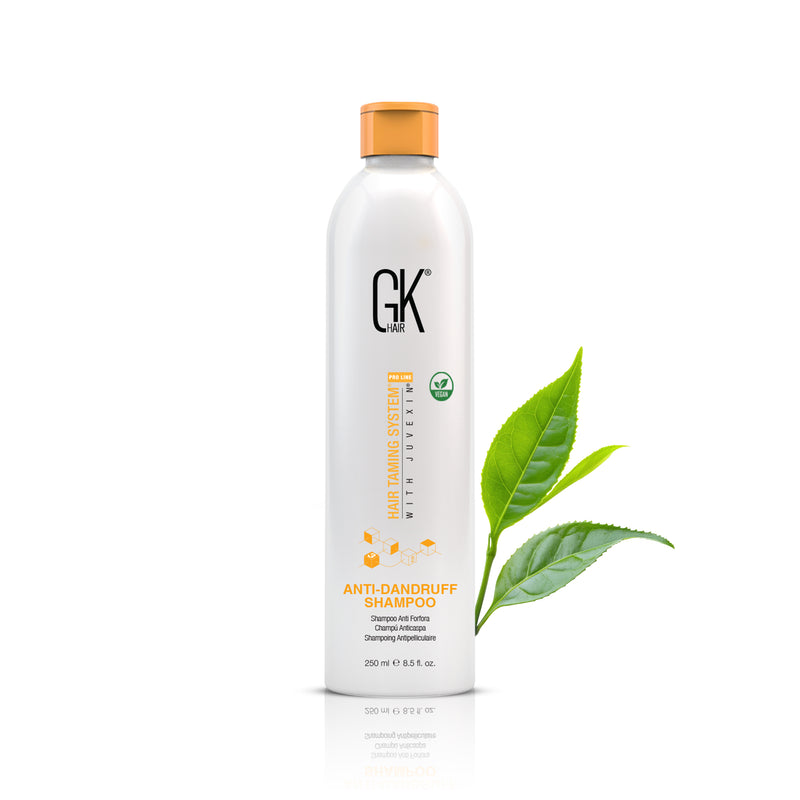
An anti dandruff shampoo for coloured hair works when it clears flakes without opening the cuticle. That means a sulphate-free formula, a pH close to the scalp's natural 4.5 to 5.5, and a dandruff-control active such as zinc or piroctone olamine. Used two to three times a week during a flare, it settles the scalp while your colour stays put. A pH-balanced, sulphate-free formula such as GK Hair Anti-Dandruff Shampoo treats the scalp while the cuticle stays closed.
Dealing with dandruff is bad enough. Dealing with it after you've spent real money on a colour treatment is something else entirely. Most effective dandruff shampoos will strip your colour right out. You need an anti dandruff shampoo for coloured hair that treats the scalp without stripping everything above it. Thankfully, advances in sulphate free shampoos have made that possible.
Can Hair Dye Cause Dandruff, or Just Make It Worse?
Can hair dye cause dandruff? While hair dye won't cause dandruff directly, it can exacerbate existing flaking many times over. It can also cause scalp irritation that mimics dandruff, even in people who have never experienced it.
Dandruff is, at its core, a scalp issue stemming from an overproduction of sebum, the presence of Malassezia yeast, and an expedited skin cell turnover. When too many dead skin cells are shed from the scalp, that's flaking. Dandruff isn't caused by poor hygiene or by the dye itself, though washing too rarely can let oil build up and make flaking worse.
Colouring can compromise the scalp's barrier. A systematic review in Health Science Reports on colouring products and the scalp barrier sets out the risk. Colouring can leave the scalp irritated or inflamed, and allergic contact dermatitis is common among people who dye their hair, usually from PPD (para-phenylenediamine) in darker shades.
Dry Scalp on Coloured Hair Is Not the Same as Dandruff
Dry scalp on coloured hair is worth separating from dandruff before you reach for a treatment, because the two conditions look similar but respond to different things. Dandruff creates oily yellow flakes and is caused by yeast. Dry scalp creates small white powdery flakes and is caused by a lack of moisture. Chemical processing, over-washing and hot water can all cause dry scalp.
Applying a medicated anti-dandruff product to a dry scalp can exacerbate the problem, since the active ingredients will be combatting yeast overproduction when that is not the cause. If your scalp flared up right after your colour appointment and is tight or itchy instead of feeling greasy, dryness may be the culprit. Not sure which you have? Our guide to dry scalp vs dandruff walks through the differences before you choose a treatment.
Why Anti Dandruff Shampoo Strips Hair Colour
Most conventional dandruff shampoos combine an antifungal active (ketoconazole, selenium sulphide or, outside the EU, zinc pyrithione) with a sulphate cleansing base. Sodium lauryl sulphate (SLS) and sodium laureth sulphate (SLES) are two of the most widely used sulphates. The base, not the antifungal agent, is what actually fades your colour. Sulphates do it by swelling the fibre and lifting the cuticle scales, which lets dye molecules wash out alongside the oil and residue.
That's a problem for colour treated hair because colour molecules sit beneath the cuticle, in the cortex. Each time you use a sulphate containing shampoo, you are stripping a little bit more colour away. Exactly how quickly hair dye fades depends on your colour and your washing frequency, but most start to see the colour fade after several weeks.
That's when most people realise their colour is flat or brassy and blame the colour service instead of what they're washing it with. If product build-up and clarifying shampoo are a concern for you, that's another discussion, but a daily anti dandruff shampoo that strips hair colour is also wearing down your cuticle over time, and that damage is difficult to reverse without a colour refresh.
What Makes a Colour Safe Dandruff Shampoo
A colour safe dandruff shampoo does two things simultaneously: it keeps the scalp's pH in the 4.5 to 5.5 ideal range that keeps the cuticle closed, and it delivers antifungals that treat Malassezia effectively without relying on harsh surfactants to do it.
Practically, a pH between 4.5 and 5.5 is important because if the cuticle is flat, colour molecules are far harder to wash out. Push the pH higher, as most sulphate-rich formulas do, and the cuticle opens up, releasing both moisture and colour.
Two antifungals come up again and again: zinc pyrithione and piroctone olamine.
Zinc pyrithione (ZPT) is antifungal and antibacterial, which is why it was the standard dandruff active in Europe for decades. But it has been prohibited in all EU cosmetic products since 1 March 2022 under Commission Regulation (EU) 2021/1902, so you will not find it on a shelf here.
That leaves two main cosmetic routes in the EU: piroctone olamine, and low-concentration zinc salts. Climbazole is also permitted, and ketoconazole or selenium sulphide come as medicated shampoos from the pharmacy. Whichever active is used, it can be formulated without sulphates, and that is what decides whether a shampoo is colour safe.
Piroctone olamine is milder. It operates on the same Malassezia principle but tends to be gentler on sensitive scalps, especially when hair has already been chemically processed. It is a common choice in sulphate-free anti-dandruff formulas, particularly for scalps that react badly to stronger actives.
The Best Dandruff Shampoo for Colour Treated Hair
The best dandruff shampoo for colour treated hair keeps the scalp condition in check while leaving the cuticle closed. That means the formula needs to be sulphate-free, pH-balanced, and contain a scalp active that doesn't rely on irritating surfactants to get the job done.
GK Hair Anti-Dandruff Shampoo meets all those criteria. Its anti-dandruff active is zinc, used at under 1% to control flaking, delivered in a sulphate-free base rather than a stripping one. The formula is also free from parabens, phthalates, DEA and TEA. Sulphate-free and pH-balanced to leave the cuticle closed upon washing, it also contains Juvexin V2, a plant-based protein derived from quinoa and pea, optimised to repair and strengthen hair from the inside out, so the fibre is reinforced while the scalp is being treated.

A gentle formula can still control flaking. The ingredients are working on the scalp, while the sulphate-free formula means it isn't stripping the cuticle open to let them in. That is the compromise most traditional brands aren't willing to commit to.
Best for oily or flaky scalps with coloured, highlighted or chemically processed hair.
| Ingredient | Purpose | Colour safe? | Sulphate-free? |
|---|---|---|---|
| Juvexin V2 | Plant protein; repairs and strengthens the hair fibre | Yes | Yes |
| Zinc, under 1%, in a sulphate-free base (GK Hair) | Controls flaking without a stripping base | Yes | Yes |
| Sodium lauryl sulphate (SLS) | Aggressive cleansing, flake removal | No, strips colour | No |
| Zinc pyrithione (ZPT) | Antifungal; prohibited in EU cosmetics since March 2022 | Not sold in the EU | Not applicable |
| Sodium laureth sulphate (SLES) | Surfactant, foaming agent | No, opens cuticle | No |
| Piroctone olamine, sulphate-free | Antifungal, gentler than ZPT | Yes | Yes |
Highlighted, Bleached and Box-Dyed Hair
Of highlighted, bleached and box-dyed hair, bleached hair is by far the most porous. It fades the quickest and is the most sensitive to any products or treatments that cause further cuticle opening. Wash frequency matters more for bleached or highlighted hair than almost anything else. Every wash that isn't needed is essentially a colour-loss event. Stick to a maximum of two washes a week while treating active dandruff, and sulphate-free absolutely cannot be negotiated.
Box dye is not gentler than salon colour. It ships with a single developer strength meant to work on every hair type, so it usually lifts more than a formula mixed for you. That leaves a rougher, more porous cuticle, which is exactly the surface sulphates strip fastest. The same principles apply, sulphate-free above all, but the damage happens quicker when you get it wrong.
Dandruff Shampoo for Dyed Hair: How to Use It
When washing dyed hair with dandruff shampoo, take your time and don't rush. This is your process for effective washing that won't speed up fading:
- Start by saturating hair in lukewarm water. Hot water will lift the cuticle before the shampoo ever makes contact.
- Apply our Anti-Dandruff Shampoo to your scalp and gently massage in. Remember: the scalp is where the magic happens. You don't need to work it through the lengths violently.
- Allow it to sit on the scalp for two to three minutes so the active can get to work.
- Rinse hair thoroughly. Leaving product on your scalp will dull colour and create further irritation.
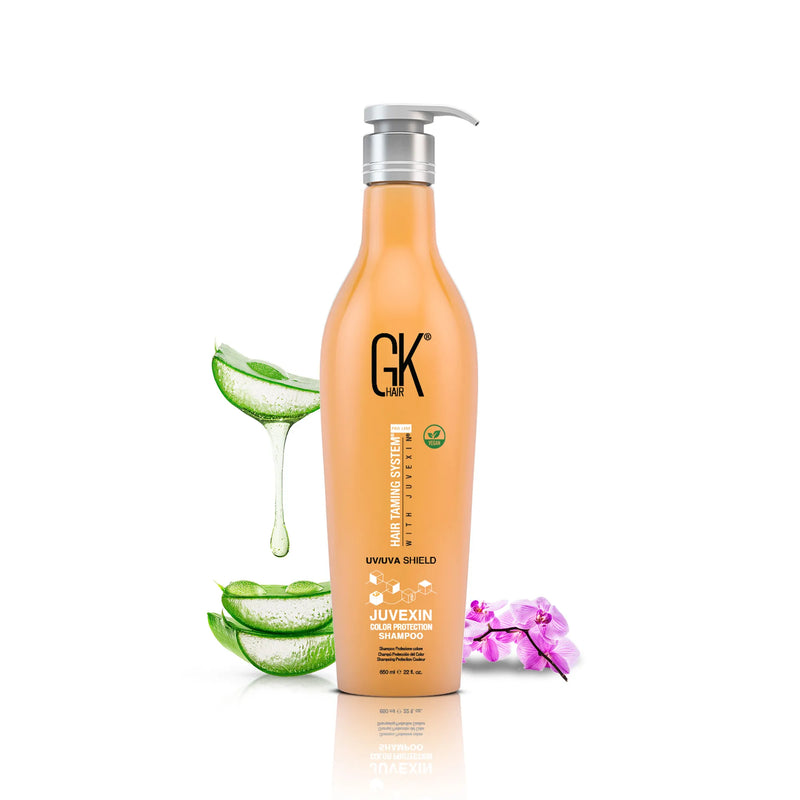
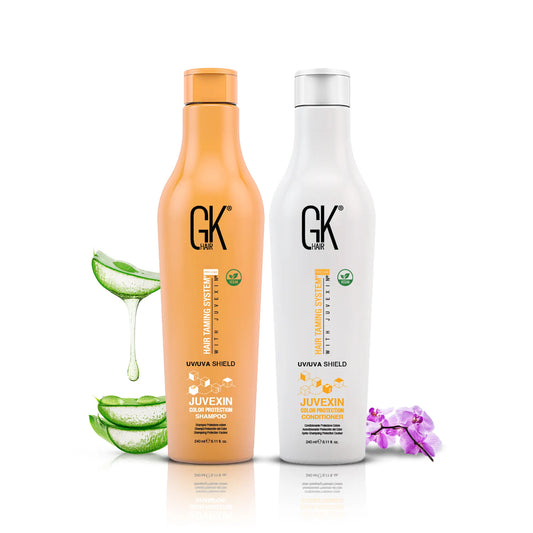
- Follow with GK Hair Shield Conditioner, which is formulated to protect colour-treated hair from fading. It closes the cuticle back down and seals moisture and colour in, so the anti-dandruff shampoo treats the scalp while Shield protects the colour above it. On your non-treatment washes, use the Shield Shampoo and Conditioner together as your everyday colour-safe pair.
How often to use dandruff shampoo during an active flare-up: 2-3 washes per week for the first 3-4 weeks. Once your scalp feels better, you can move to using it just once a week to maintain results.
If flaking has not improved after 4 weeks of proper use, or if the scalp becomes red and sore at any time, seek medical advice. That's too much for a shampoo to fix on its own.
Scalp Habits That Help
Even with the best anti dandruff shampoo at your disposal, without the right care habits you might waste the potency of that shampoo. These three factors make a difference when paired with the right shampoo.
- Use your sulphate free shampoo two to three times weekly, not daily.
- Use lukewarm water consistently, and if you live in a region where hard water is prevalent, use a shower filter to avoid too much mineral load.
- Keep in mind that seawater is saline, whereas pool water is packed with chlorine. A compromised scalp barrier can be irritated by both chlorine and salt, so remember to rinse your hair thoroughly after swimming.
Stylist's Corner
When a client comes in with both dandruff and colour-treated hair, the first thing I check is their wash routine, not their shampoo. Most are washing daily or every other day and using water that's too hot. Dropping wash frequency to three times a week and switching to lukewarm water alone often reduces flaking within two weeks, before any product change. Add a sulphate-free anti-dandruff formula and the scalp really settles. The shampoo gets the credit, but the routine change usually did most of the work.
Shop GK Hair's colour care range for masques and treatments formulated to keep colour-treated hair vibrant between salon visits.
Frequently Asked Questions
Can you use anti dandruff shampoo on colour treated hair?
Yes, just make sure that it is sulphate free. The antifungal active works on your scalp, not the dye that's trapped in your hair shaft, so it's the cleansing base that determines whether your colour survives wash day. Sulphate-free anti-dandruff shampoo treats flaking without leaving the cuticle open.
Does anti dandruff shampoo strip hair dye?
Yes, most traditional anti dandruff shampoos remove hair dye because they contain sulphates. Sulphates open up the hair cuticle to cleanse the scalp, but they drag colour molecules with them each time you wash. Sulphate-free formulas keep the cuticle flat while you wash, and the antifungal still reaches the scalp directly, where the flaking actually starts.
How often should I use dandruff shampoo on colour treated hair?
Two to three times a week when your scalp is actively flaring up, then once a week for maintenance once your scalp has calmed down, usually after 3-4 weeks of regular treatment. The more often you wash with any shampoo (even anti-dandruff shampoo), the more cuticle exposure you create and the quicker your colour will fade.


Leave a Comment